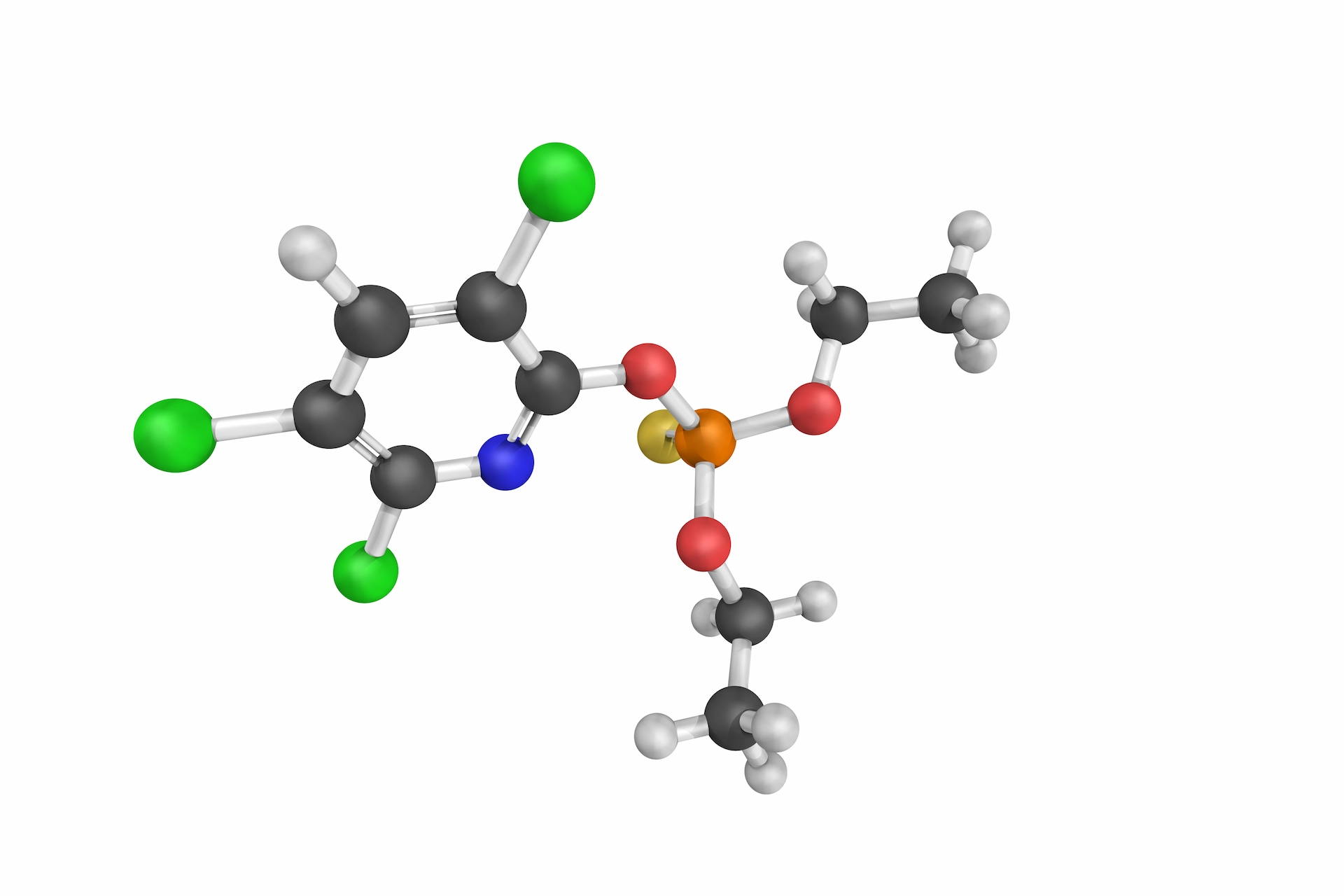
In early 2026, researchers at UCLA Health published a landmark study showing that prolonged exposure to the pesticide chlorpyrifos raises the risk of developing Parkinson’s disease by more than 250%. For individuals who worked in or lived near agricultural areas where this chemical was routinely sprayed, the findings carry profound implications. If you or a loved one used or were exposed to chlorpyrifos and were subsequently diagnosed with Parkinson’s Disease, you may be entitled to compensation.
Our firm is actively investigating chlorpyrifos exposure-related Parkinson’s Disease claims, and we represent individuals and families seeking compensation for serious injuries or the loss of a loved one. Our firm aims to hold the pesticide manufacturers accountable and pursue justice for affected individuals. Contact LexLegal today for a free consultation by filling out our secure online form to schedule a consultation. There are no upfront costs, and you pay nothing unless we recover compensation on your behalf. There’s no obligation, and your information will remain confidential. We are available to answer your questions, explain your rights, and discuss how we can advocate for you.
Chlorpyrifos belongs to a class of chemicals known as organophosphates — compounds originally developed as nerve agents that were later adapted for commercial pest control. Dow Chemical Company (today known as Corteva Agriscience) first registered the chemical with the EPA in 1965 and marketed it as a powerful tool for eliminating insects across agricultural, residential, and commercial settings.
The chemical works by inhibiting acetylcholinesterase, an enzyme that nerve cells rely on to transmit signals properly. This is what makes it lethal to insects — but that same biological disruption can harm the human nervous system, especially when exposure is prolonged or repeated.
At the height of its use, chlorpyrifos was among the most prevalent crop pesticides in the country. EPA data indicates that between 1987 and 1998, annual domestic application ranged from 21 to 24 million pounds. Its uses went well beyond agriculture — it was also found in home pest control sprays, termite treatments, and turf care products for golf courses and commercial landscapes.
Corteva Agriscience halted chlorpyrifos production in February 2020, attributing the decision to falling demand after the European Union prohibited the chemical. Nevertheless, remaining inventory continued to be distributed and applied, and restricted agricultural uses persist today.
Over the years, chlorpyrifos was packaged and sold under a variety of trade names. The most common include:
The chemical was applied to a wide variety of food and feed crops:
People came into contact with chlorpyrifos through multiple routes: breathing in airborne particles, absorbing the chemical through the skin, and consuming contaminated food or water. Because chlorpyrifos is a volatile compound, it does not stay where it is sprayed — it evaporates into the air, seeps into aquifers, and travels through waterways via runoff from treated fields. The EPA has identified harmful levels of the chemical in all 50 states, with agricultural regions bearing the heaviest burden.
Individuals who handled chlorpyrifos products in the course of their jobs faced the most concentrated exposure. This group includes:
The impact was not confined to workplaces. Entire communities situated downwind or downstream from sprayed fields were chronically exposed — in many cases for years or decades, and often with no notice or awareness. Regions with intensive crop production — such as California’s Central Valley — have raised particular alarm. Family members of agricultural workers also faced secondary exposure through contaminated work clothes and equipment brought into the home.
A growing body of research has pointed to a relationship between organophosphate pesticides and neurodegenerative disease. In January 2026, a study published by UCLA Health in the journal Molecular Neurodegeneration delivered what many researchers consider the strongest evidence to date — not only confirming a statistical association between chlorpyrifos and Parkinson’s, but also identifying the cellular mechanism responsible for the damage.
A team led by Dr. Jeff Bronstein, a neurology professor at UCLA Health, drew on data from the university’s Parkinson’s Environment and Genes (PEG) study — a long-running research program that tracks environmental contributors to the disease. The researchers cross-referenced California’s pesticide application records with the home and work locations of 829 Parkinson’s patients and 824 matched controls to build individualized exposure profiles.
The data revealed that individuals with sustained residential proximity to chlorpyrifos application sites faced a greater than 2.5-fold elevation in Parkinson’s risk relative to those without comparable exposure.
Parkinson’s disease results from the gradual destruction of neurons that produce dopamine — a chemical messenger critical to movement and coordination. The UCLA research team traced the mechanism by which chlorpyrifos accelerates this destruction:
The team validated these findings through animal models. Laboratory mice inhaling chlorpyrifos over an 11-week period displayed motor deficits, dopamine neuron loss, neuroinflammation, and alpha-synuclein buildup — closely mirroring Parkinson’s pathology. In zebrafish experiments, scientists demonstrated that when autophagy was restored or the synuclein protein was eliminated, the neurons remained intact.
Dr. Bronstein underscored the significance: “This study establishes chlorpyrifos as a specific environmental risk factor for Parkinson’s disease, not just pesticides as a general class.” He added that uncovering the autophagy pathway “also points us toward potential therapeutic strategies to protect vulnerable brain cells.” (UCLA Health)
Parkinson’s is a chronic, progressive disorder of the nervous system that currently affects close to one million people in the United States. Patients experience a worsening set of motor and non-motor symptoms over time, including:
No cure exists, and current therapies lose effectiveness as the disease advances. The Michael J. Fox Foundation estimates that annual per-patient care costs average approximately $26,400.
The path chlorpyrifos has traveled through the U.S. regulatory system tells a story of repeated scientific warnings undercut by industry opposition and political reversals. That history — and the harm it enabled — is central to the legal theories now taking shape.
The UCLA study has transformed the legal landscape. Prior to 2026, the link between chlorpyrifos and Parkinson’s rested primarily on epidemiological associations. The new research goes further by demonstrating the specific cellular pathway through which the pesticide destroys dopamine neurons — establishing what scientists call biological plausibility and strengthening claims that the relationship is causal.
Several factors are converging to drive litigation forward:
Individuals may qualify to file a Chlorpyrifos Exposure lawsuit if they meet certain criteria. To pursue a claim, potential claimants generally must meet the following criteria:
A claimant should be able to show a credible history of contact with chlorpyrifos — whether through work duties or residential proximity to treated areas. Common exposure backgrounds include:
The claim must be supported by a medical diagnosis of Parkinson’s disease from a licensed physician. In certain circumstances, related conditions such as atypical Parkinsonism or progressive supranuclear palsy may also support a claim, depending on the facts and the applicable medical evidence.
There is no requirement that exposure and diagnosis occur close together in time. Parkinson’s develops silently over many years — often a decade or more — before outward symptoms surface. Exposure dating back to the 1980s through 2020 can be relevant to a claim filed today.
Additionally, in most jurisdictions, the clock on the statute of limitations does not start until the individual becomes aware (or reasonably should have become aware) of the link between their illness and chlorpyrifos. Given that the 2026 UCLA study only recently established this connection with scientific rigor, the filing window may still be open for many affected individuals.
At LexLegal, we are dedicated to ensuring that pesticide manufacturers are held responsible for any harm resulting from inadequate disclosure of the risks and dangers linked to the long-term use of or exposure to their products. Let us fight for you to hold the manufacturers accountable for your injuries and recover the compensation you deserve.
If you or a loved one used or were exposed to Chlorpyrifos and were subsequently diagnosed with Parkinson’s Disease, contact us today. We stand ready to assist you in pursuing fair compensation for your injuries to the fullest extent allowed under the law.
LexLegal offers free, confidential case evaluations to determine whether you qualify for a Chlorpyrifos Exposure lawsuit. Complete our instant case evaluation form. We’ll review your information and promptly respond about your legal options. Every Chlorpyrifos Exposure lawsuit we handle is taken on a contingency fee basis, which means there are no upfront costs for clients. Our firm is experienced in handling toxic exposure cases, and we welcome any questions you may have.
Complete our instant case evaluation today to learn whether you may be eligible to file a Chlorpyrifos Exposure lawsuit.